Propósito

✔ Brazil SFE® Pharma Produtivity, Effectiveness, CRM, BI, SFE, ♕Data Science Enthusiast, ✰BI, Big Data & Analytics, ✰Market Intelligence, ♕Sales Force Effectiveness, Vendas, Consultores, Comportamento, etc... Este é um lugar onde executivos e profissionais da Indústria Farmacêutica atualizam-se, compartilham experiências, aplicabilidades e contribuem com artigos e perspectivas, ideias e tendências. Todos os artigos e séries são desenvolvidos por profissionais da indústria. Este Blog faz parte integrante do grupo AL Bernardes®.

Meni

.: Vitrine

Carregando artigos...

Views

Mostrando postagens com marcador ORPC. Mostrar todas as postagens

¿Qué es una CRO (Organización de Investigación por Contrato)?

¿Qué es una CRO (Organización de Investigación por Contrato)?

 BrazilSFE  #CRO #InvestigaciónClínica #EnsayosClínicos #Farmacéutica #Biotecnología #DispositivosMédicos #OrganizaciónDeInvestigación #EnsayosClínicos #OrganizaciónDeInvestigaciónPorContrato #Ciencia #InnovaciónMédica #DesarrolloDeFármacos #RegulaciónFarmacéutica #BuenasPrácticasClínicas #FDA #Anvisa #IndustriaFarmacéutica #Medicamentos #FasesClínicas #Farmacovigilancia #Salud #TecnologíaDeLaSalud #InvestigaciónMédica #Biofarma #CienciasDeLaVida #DesarrolloDeFármacos #Cumplimiento #InnovaciónEnLaAtenciónSanitaria #InvestigaciónMédica

 Versión en español    Versión en portugués    Versión en inglés 


¿QUÉ ES UN CRO ?

La CRO - Contract Research Organization u ORPCs - Clinical Research Representative Organizations - se refiere a una organización de investigación por contrato de servicios de investigación clínica ( CRO ) que brinda servicios de investigación a empresas farmacéuticas, de biotecnología y de dispositivos médicos. Los servicios pueden abarcar desde el descubrimiento de fármacos hasta la comercialización, desde la farmacovigilancia hasta los servicios posteriores a la aprobación. En los ensayos clínicos, un patrocinador (la organización que busca investigar la seguridad y eficacia de un nuevo tratamiento) contrata a una  CRO  de manera contractual, proyecto por proyecto. 


 Leia também: 

Las CRO  brindan la orientación, el asesoramiento y la experiencia de ejecución expertos necesarios para completar los ensayos clínicos de manera segura 
y eficiente, sin que el patrocinador tenga que contratar a dicho personal a tiempo completo.


Lea también:

2018 | Las 10 principales CRO: organizaciones de investigación por contrato a nivel mundial

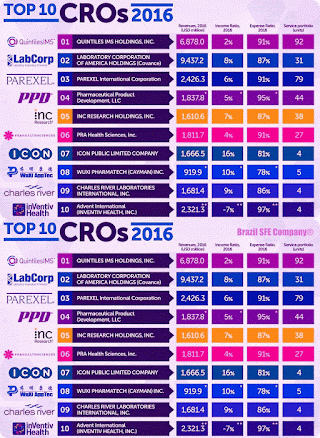
2016 | Las 10 principales CRO: organizaciones de investigación por contrato a nivel mundial

¿Cómo funcionan los ensayos clínicos?

Una vez que los investigadores han realizado pruebas iniciales de un tratamiento prometedor en un laboratorio, deben comenzar un ensayo clínico para demostrar su seguridad y eficacia antes de que se les permita comercializarlo al público. Una  CRO  llevará a cabo el ensayo en fases sucesivas (Fase I, Fase II y Fase III). El primer paso es inscribir a los participantes del ensayo clínico, quienes deben cumplir ciertos criterios, dependiendo del perfil del paciente previsto para el ensayo específico, y quienes pueden recibir una compensación por su tiempo. A medida que avanza cada fase del estudio, se aprende más sobre la eficacia, los riesgos y los efectos secundarios de un tratamiento.


Funciones y responsabilidades de las organizaciones de investigación por contrato

Una  CRO  es responsable de la planificación, configuración, ejecución y gestión diaria de su ensayo clínico contratado. La gestión y supervisión de la parte técnica (recopilación de datos y exámenes médicos) constituye una parte importante de sus tareas. Es importante señalar que el cumplimiento clínico con las pautas de las agencias reguladoras es crucial, y la adherencia a los estándares de Buenas Prácticas Clínicas ( BPC ) es parte del rol de la  CRO, ya que actúa como el eje central del estudio, conectando al patrocinador con otras partes interesadas como agencias reguladoras, comités de ética, proveedores, hospitales, etc.


¿Qué es una CRO en ensayos clínicos?

En los ensayos clínicos, una  CRO  es la entidad que planifica, desarrolla y coordina el protocolo del ensayo clínico. Luego ejecuta este protocolo de acuerdo con las reglas de la agencia reguladora y los estándares de GCP. Un patrocinador, que puede tener muchos tratamientos potenciales que desea probar a través de un ensayo clínico, contrata a una  CRO  para que se encargue del trabajo que demanda mucho tiempo y recursos y que requiere un ensayo clínico. El patrocinador puede aprovechar la  experiencia del CRO, que, gracias a la  ejecución repetida de pruebas  una tras otra, puede anticipar posibles retrasos y dificultades, evitándolos de antemano.


¿Qué hace una organización de investigación por contrato?

Las CRO  pueden proporcionar una amplia gama de servicios de investigación clínica a patrocinadores médicos, incluidos, entre otros :


  • Gestión de proyectos y datos
  • Supervisión y ejecución de estudios clínicos
  • Investigación y educación sobre cumplimiento
  • Codificación de medicamentos y enfermedades
  • Programación de validación
  • Planificación del desarrollo y comercialización de productos
  • Informe de seguridad y eficacia
  • Análisis de calidad
  • Análisis bioestadístico
  • Análisis estadístico
  • Redacción médica

Tipos de organizaciones de investigación por contrato

Diferentes CRO  pueden ofrecer distintos servicios, pero generalmente se agrupan según el lugar que ocupa su contribución dentro de la agenda de investigación del patrocinador, junto con la  función principal de la CRO:


  • Descubrimiento
  • Preclínico
  • Clínico
  • Servicios de laboratorio


Preguntas frecuentes:

¿Quién es el patrocinador de la investigación clínica?

El patrocinador es la organización que inicia un ensayo clínico para investigar la seguridad y eficacia de un posible tratamiento. El patrocinador se asocia con una  CRO  y la  CRO  gestiona y ejecuta el ensayo clínico del patrocinador.


¿Qué es una empresa CRO?

Una empresa  CRO  es una organización que ofrece sus servicios a empresas farmacéuticas, biotecnológicas y de dispositivos médicos para ayudarlas en diversas formas de investigación. Algunas  CRO se centran específicamente en trabajar con empresas patrocinadoras de cierto tamaño. Por ejemplo, Synteract se centra en el mercado SMID, o pequeñas y medianas empresas biofarmacéuticas.


¿Cuál es la diferencia entre una CRO y una empresa farmacéutica?

Las compañías farmacéuticas desarrollan candidatos a tratamientos farmacológicos para su eventual comercialización. Una vez que el tratamiento esté listo para ser probado en un ensayo clínico con el fin de demostrar a las autoridades reguladoras que es seguro y eficaz, una compañía farmacéutica se asociará con una  CRO. Luego, el  CRO  planificará, coordinará y ejecutará el ensayo clínico.


Beneficios de las organizaciones de investigación por contrato

El principal beneficio de  las CRO es que permiten a los patrocinadores hacer lo que mejor saben hacer: centrarse en el desarrollo del tratamiento, mientras que  las CRO se encargan de los detalles esenciales de la planificación y ejecución de los ensayos clínicos. Dados los amplios recursos y procesos necesarios para llevar a cabo un ensayo clínico de manera segura y eficiente (incluida la recopilación de datos, la gestión del proyecto y la atención diaria al paciente), delegar estas funciones a una  CRO  que ya tenga estos sistemas implementados es una solución atractiva para muchos patrocinadores.


¿Cuál es el papel de una organización de investigación por contrato?

Una  CRO  actúa en nombre de un patrocinador y es responsable de garantizar que su ensayo clínico se desarrolle sin problemas. Un  CRO  reemplaza lo que de otro modo sería un equipo interno costoso y necesario de forma intermitente. Gestionar y ejecutar todas las funciones de los ensayos clínicos —especialmente para aquellos patrocinadores que rara vez necesitan realizar ensayos clínicos— sería prohibitivamente costoso y demandaría muchos recursos.


¿Qué métricas deberían utilizar las organizaciones de investigación por contrato?

Las CRO  emplean diferentes métricas para medir la eficiencia y el progreso, dependiendo de los objetivos y expectativas de los patrocinadores y las limitaciones del GPC y los marcos regulatorios. Hay tres cronogramas básicos que merecen atención y evaluación:

  • Se recibió el borrador del presupuesto del patrocinador para el presupuesto final
  • IRB enviado a IRB aprobado
  • Ejecución íntegra del contrato de inscripción abierta

¿Qué es una organización de investigación por contrato en etapa inicial?

Los ensayos clínicos se realizan en fases, generalmente Fase I , Fase II y Fase III . Si un medicamento no cumple los requisitos de seguridad o eficacia en cualquier momento de estas fases sucesivas, no puede pasar a la siguiente fase. Una  CRO en etapa temprana  se centra en las fases iniciales (principalmente la Fase I , a veces la Fase II ).


¿Cómo elegir una CRO?

Una  CRO  debe ser capaz de proporcionar la combinación adecuada de experiencia, conocimiento, comunicación y capacidad de respuesta. Comprender su área terapéutica y qué esperar de su fase de estudio es esencial. La transparencia también es importante: poder resolver posibles problemas al comienzo del proceso, de manera colaborativa, puede significar la diferencia entre alcanzar hitos y producir retrasos innecesarios.


Elegir una  CRO  es una de las decisiones más importantes que un patrocinador puede tomar cuando se prepara para iniciar un ensayo clínico.  Es necesario tener en cuenta la comprensión del rol y la función de una  CRO, la comprensión de los factores a tener en cuenta al elegir una  CRO  y el conocimiento de qué esperar de manera realista de la  CRO que elija.

👉 No olvides seguir a  André Bernardes  en Linkedin o  suscribirte a nuestra newsletter  🔔 para estar informado de todas las publicaciones.  Haga clic aquí y contácteme vía What's App. 

¡Comenta y comparte este artículo! 


Comunicación eficaz: Habilidades de comunicación no verbal: Capítulo 6: Cómo manejar las objeciones y la resistencia Comunicación eficaz: habilidades de comunicación no verbal: Capítulo 2: Preparación estratégica previa a la visita Comunicación eficaz: habilidades de comunicación no verbal: Capítulo 3: Estrategias de apertura impactantes

Comunicación eficaz: habilidades de comunicación no verbal: Capítulo 4: Construir una conexión emocional Comunicación eficaz: Habilidades de comunicación no verbal: Capítulo 1: Introducción al arte de la visita médica productiva Comunicación eficaz: habilidades de comunicación no verbal: Capítulo 5: Comunicación no verbal y lenguaje corporal


 Serie Consultores, Propagandistas y Representantes 

El Representante Farmacéutico - En busca de la Eficacia: 5 Características Importantes (Serie Consultores, Publicistas y Representantes) - André Luiz BernardesEl Representante Farmacéutico - Buscando la Efectividad: Maximizando Visitas (Serie Consultores, Anunciantes y Representantes) - André Luiz Bernardes  El Representante Farmacéutico - En busca de la Efectividad: Aumentando la Efectividad de la Fuerza de Ventas Farmacéutica: La Interacción entre Analítica, Inteligencia Artificial e Interacción Humana (Serie Consultores, Anunciantes y Representantes) - André Luiz Bernardes

El Representante Farmacéutico - En busca de la Eficacia: Inteligencia Artificial (Serie Consultores, Publicistas y Representantes) - André Luiz Bernardes El Representante Farmacéutico - En busca de la Eficacia - Optimizando Estrategias para el Éxito (Serie Consultores, Publicistas y Representantes) - André Luiz Bernardes El representante farmacéutico: En busca de la eficacia: ¿Qué canales de marketing farmacéutico debería probar? (Serie Consultores, Propagandistas y Representantes) - André Luiz Bernardes

What is CRO - Contract Research Organization?

What is CRO - Contract Research Organization?

 #BrazilSFE  #CRO #ClinicalResearch #ClinicalTrials #Pharmaceutical #Biotechnology #MedicalDevices #ResearchOrganization #ClinicalTrials #ContractResearchOrganization #Science #MedicalInnovation #DrugDevelopment #PharmaceuticalRegulation #GoodClinicalPractices #FDA #Anvisa #PharmaceuticalIndustry #Medicines #ClinicalPhases #Pharmacovigilance #Health #HealthTechnology #MedicalResearch #Biopharma #LifeSciences #DrugDevelopment #Compliance #HealthcareInnovation #MedicalResearch


 Spanish version    Versão em Português    English Version 


WHAT IS A CRO ?

CRO ( Contract Research Organization or CRO ) refers to a clinical research services contract research organization ( CRO ) that provides research services to pharmaceutical, biotechnology, and medical device companies. Services can range from drug discovery to commercialization, from pharmacovigilance to post-approval services. In clinical trials, a sponsor (the organization seeking to investigate the safety and efficacy of a new treatment) hires a  CRO  on a contractual, project-by-project basis.


 Leia também: 


CROs provide the expert guidance, advice, and execution expertise needed to complete clinical trials safely and efficiently—without the sponsor having to hire such staff full-time.


Read also:

2018 | Top 10 CROs - Contract Research Organizations - Globais

2016 | Top 10 CROs - Contract Research Organizations - Globais

How do clinical trials work?

Once researchers have done initial testing on a promising treatment in a laboratory, they must begin a clinical trial to prove its safety and effectiveness before they are allowed to market it to the public. A  CRO  will conduct the trial in successive phases (Phase I, Phase II, and Phase III). The first step is to enroll clinical trial participants—who must meet certain criteria, depending on the intended patient profile of the specific trial—and who may be compensated for their time. As each phase of the study progresses, more is learned about a treatment’s effectiveness, risks, and side effects.


Contract Research Organization Roles and Responsibilities

A  CRO  is responsible for the planning, setup, execution, and day-to-day management of their contracted clinical trial. Handling and overseeing the technical side—data collection and medical testing—make up a significant portion of their duties. It is important to note that clinical compliance with regulatory agency guidelines is crucial, and adherence to Good Clinical Practice ( GCP ) standards is part of the CRO’s role  , as they act as the central hub of the trial, connecting the sponsor with other stakeholders such as regulatory agencies, ethics committees, vendors, hospitals, etc.


What is a CRO in clinical trials?

In clinical trials, a  CRO  is the entity that plans, develops, and coordinates the clinical trial protocol. It then executes that protocol in accordance with regulatory agency rules and GCP standards. A sponsor—which may have many potential treatments it wants to test through a clinical trial—hire a  CRO  to handle the time-consuming and resource-intensive work required of a clinical trial. The sponsor is able to leverage the  CRO’s expertise, which, because of the CRO’s repeated execution   of trial after trial, is able to anticipate potential delays and pitfalls and avoid them in advance.


What does a contract research organization do?

CROs  are able to provide a wide range of clinical research services to medical sponsors, including but not limited to :


  • Project and Data Management
  • Supervision and execution of clinical studies
  • Research and Compliance Education
  • Drug and Disease Coding
  • Validation Programming
  • Product Development and Commercialization Planning
  • Safety and efficacy report
  • Quality Analysis
  • Biostatistical analysis
  • Statistical Analysis
  • Medical Writing

Types of Contract Research Organizations

Different CROs  may offer varying services, but they are most commonly grouped by where their contribution falls within the sponsor's research agenda, along with the  CRO's primary function :


  • Discovery
  • Preclinical
  • Clinical
  • Laboratory Services


Frequently Asked Questions:

Who is the sponsor of clinical research?

The sponsor is the organization that initiates a clinical trial to investigate the safety and effectiveness of a potential treatment. The sponsor partners with a  CRO, and the  CRO  manages and runs the sponsor's clinical trial.


What is a CRO company?

A  CRO  is an organization that offers its services to pharmaceutical, biotechnology, and medical device companies to assist them in various forms of research. Some  CROs are specifically focused on working with sponsoring companies of a certain size. For example, Synteract focuses on the SMID market , or small- to medium-sized biopharmaceutical companies.


What is the difference between a CRO and a pharmaceutical company?

Pharmaceutical companies develop drug treatment candidates for eventual commercialization. Once that treatment is ready to be tested in a clinical trial setting in order to prove to regulatory authorities that it is safe and effective, a pharmaceutical company will partner with a  CRO. The  CRO  will then plan, coordinate, and execute the clinical trial.


Benefits of Contract Research Organizations

The main benefit of  CROs is that they allow sponsors to do what they do best—focus on treatment development—while  CROs handle the nuts and bolts of clinical trial planning and execution. Given the extensive resources and processes required to conduct a clinical trial safely and efficiently—including data collection, project management, and day-to-day patient care—delegating these functions to a  CRO  that already has these systems in place is an attractive solution for many sponsors.


What is the role of a contract research organization?

A  CRO  acts on behalf of a sponsor and is responsible for ensuring that their clinical trial runs smoothly. A  CRO  replaces what would otherwise be an expensive, intermittently needed in-house team. Managing and executing all clinical trial functions—especially for those sponsors who rarely need to conduct clinical trials—would be cost and resource prohibitive.


What metrics should contract research organizations use?

CROs  employ different metrics to measure effectiveness and progress, depending on the goals and expectations of sponsors and the constraints of GPC and regulatory frameworks. There are three basic timelines that deserve attention and evaluation:


  • Sponsor's draft budget received for finalized budget
  • IRB sent to IRB approved
  • Full execution of the contract for open registration

What is an early-stage contract research organization?

Clinical trials occur in phases, usually Phase I , Phase II , and Phase III . If a drug does not meet safety or efficacy milestones at any point in these successive phases, it cannot proceed to the next phase. An  early-stage CRO  focuses on the early-stage phases (mostly Phase I , sometimes Phase II ).


How to choose a CRO?

A  CRO  must be able to provide the right combination of experience, expertise, communication and responsiveness. Understanding your therapeutic area and what to expect from your study phase is key. Transparency is also important – being able to resolve potential issues early in the process, collaboratively, can mean the difference between successful milestones and unnecessary delays.


Choosing a  CRO  is one of the most important decisions a sponsor can make when preparing to initiate a clinical trial. Understanding the role and function of a CRO, understanding the factors to consider when choosing a  CRO, and knowing what to realistically expect from the  CRO  you choose all need to be taken into consideration.


👉 Don't forget to follow  André Bernardes  on Linkedin or  subscribe to our newsletter  🔔 to be notified about all posts.  Click here and contact me via What's App. 

Comment and share this article! 

brazilsalesforceeffectiveness@gmail.com


Effective Communication: Nonverbal Communication Skills: Chapter 6: Managing Objections and Resistance Effective Communication: Nonverbal Communication Skills: Chapter 2: Pre-Visit Strategic Preparation Effective Communication: Nonverbal Communication Skills: Chapter 3: Impactful Opening Strategies

Effective Communication: Nonverbal Communication Skills: Chapter 4: Building Emotional Connection Effective Communication: Nonverbal Communication Skills: Chapter 1: Introduction to the Art of the Productive Medical Visit Effective Communication: Nonverbal Communication Skills: Chapter 5: Nonverbal Communication and Body Language


 Consultants, Propagandists and Representatives Series 

The Pharmaceutical Representative - Seeking Effectiveness: 5 Important Characteristics (Consultants, Advertisers and Representatives Series) - André Luiz BernardesThe Pharmaceutical Representative - Seeking Effectiveness: Maximizing Visits (Consultants, Advertisers and Representatives Series) - André Luiz Bernardes  The Pharmaceutical Representative - Seeking Effectiveness: Increasing the Effectiveness of the Pharmaceutical Sales Force: The Interaction between Analytics, AI and Human Interaction (Consultants, Advertisers and Representatives Series) - André Luiz Bernardes

The Pharmaceutical Representative - Seeking Effectiveness: Artificial Intelligence (Consultants, Advertisers and Representatives Series) - André Luiz Bernardes The Pharmaceutical Representative - Seeking Effectiveness — Optimizing Strategies for Success (Consultants, Advertisers and Representatives Series) - André Luiz Bernardes The Pharmaceutical Representative - Seeking Effectiveness: Which Pharmaceutical Marketing Channels Should Be Tested? (Consultants, Advertisers and Representatives Series) - André Luiz Bernardes